Checking for bed bugs: the 5-minute hotel routine
By Skatek · · 3 min read · Updated
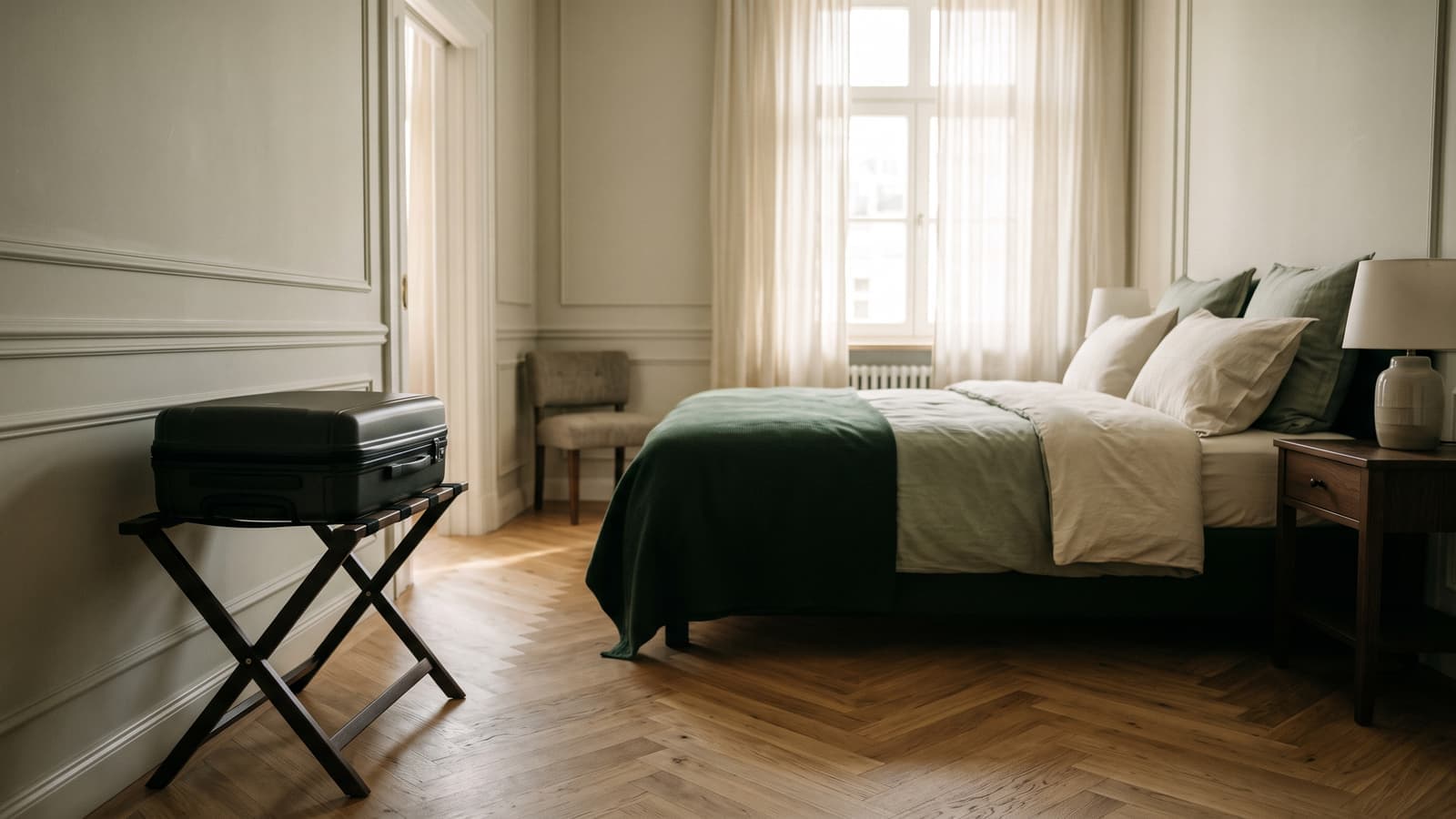
Hotel rooms are one of the most common ways bed bugs travel. Rooms turn over every night, luggage arrives from dozens of countries, and most guests never report anything. Checking a room properly takes about five minutes and can save you weeks of trouble at home.
When you arrive
Don't put your luggage on the bed or the floor. Use the bathtub or the luggage rack while you check the room, and keep using them during your stay. Pull the rack away from the wall first: bed bugs often hide behind skirting boards and headboards, and a rack against the wall is a bridge straight into your bags. Bed bugs struggle to climb hard, smooth surfaces, so the bathroom is one of the safest places in the room.
Where to look
Start with the bed. Pull back the sheets and check the mattress seams, piping and corners with the torch on your phone. You are looking for small dark spots, shed skins or the bugs themselves. An unfed adult is flat and oval, about the size of a lentil. Only after a meal does it swell to the shape of an apple seed.
Check the box spring if you can reach it, and run a fingernail or a card along the edges of the headboard. Fixed headboards are among the most common hiding places in hotel rooms because cleaning staff rarely move them. The same goes for the skirting boards around the bed. Then check the cushions and seams of any sofa or armchair, and the bedside tables, especially the drawers and the gap where the table meets the wall.
If you find something
Photograph what you found straight away. You will need it if you talk to the manager or report it later.
Ask the front desk for a different room on a different floor, not next to, above or below the first one. Bed bugs move through wall voids and gaps in the floor, so the room next door is rarely safe.
Protecting your luggage
Even if the room looks clean, a few habits are worth keeping:
- Keep your suitcase zipped and on the rack or in the bathtub, not open on the floor near the bed.
- Don't leave clothes over the furniture or on the carpet.
- Put worn clothes in sealable plastic bags.
- Don't charge your phone or laptop on the bedside table. Bed bugs are drawn to warmth.
When you get home
Unpack straight into the laundry area. Washing at 60°C kills bed bugs, and so does a hot tumble dryer cycle of at least 30 minutes (Naylor and Boase 2010). Delicate clothes that can't be washed hot can go in the dryer dry, on high heat for 30 minutes. Check the care labels first.
Heat works because bed bugs can't survive it for long. In lab tests, adults died at about 48°C and eggs at about 55°C (Kells and Goblirsch 2011). For items that can't take heat, freezing works too, but slowly: all life stages died after 80 hours at -16°C (Olson et al. 2013). Leave them in the freezer for at least four days.
Don't leave a suitcase in the garage or basement to starve them out. At room temperature, unfed bed bugs have lived for close to five months in lab studies (PCT, on Polanco et al. 2011).
For hotels
A guest's five-minute check finds bed bugs once they are already in the room. Hotels and their pest control company can check before the next guest arrives: ExHale makes an empty room read as occupied, so bed bugs come out where a technician can find them.